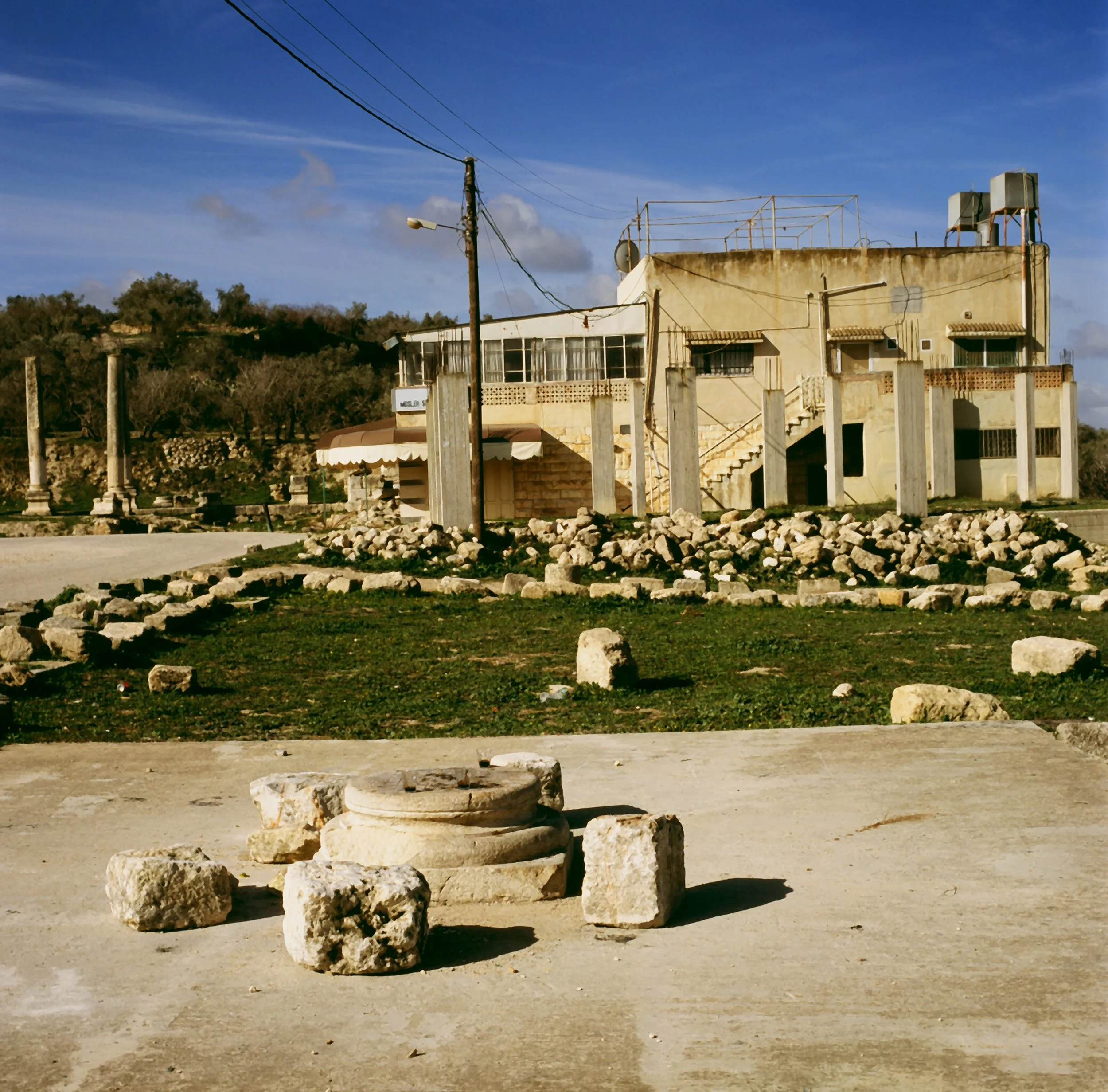
The Roman Forum of Sebastia World Heritage site in Danger, inscribed in July 2026. After that the archaeological site was confiscated by the Government of Israel. ©Federico Busonero
This contribution is published circa three years after the 7th of October 2023. This date marks on the one hand the heinous attack perpetrated by Hamas in Israel and on the other hand the disproportionate reaction of the Government of Israel towards Gaza and its population as well as the normalization of colonial settlers’ violence in the West Bank and East Jerusalem. Both actions unlocked, perpetrated—and are still perpetrating—unprecedented deliberate attacks on the cultural heritage in Palestine.
The cultural heritage of Gaza is nearly completely obliterated, with dozens of highly significant heritage sites irreversibly lost. According to the BBC, “UNESCO has verified damage to 145 religious, historic and cultural sites in Gaza since 7 October 2023. It has largely used assessments from satellite imagery. Local groups which have carried out ground surveys put the level of damage far higher. Gaza's history stretches back more than 5,000 years. Different civilisations have left their mark: Canaanites, ancient Egyptians, Philistines, Assyrians, Persians, Greeks, Jewish Hasmoneans, Romans, Christian Byzantines, and Muslim Mamluks and Ottomans.” [1] ICOMOS-Palestine reported that “more than 200 sites out of 350 heritage sites in the Gaza Strip were targeted and severely damaged or even demolished.” [2]
Today, the population of Gaza is still fighting to guarantee the minimal living conditions for human beings. In spite of the harsh situation, volunteers have started to work for the restoration of key sites such as the Great Omari Mosque. The Middle East Monitor explains that “architecturally, the mosque reflects a rich Islamic heritage, featuring 38 marble columns, circular arches, high domes and a courtyard built of Karak sandstone adorned with intricate decorations. Its Mamluk-style minaret, with a square base and octagonal tiers, remains one of its most distinctive features.” [3]
Within the premises of the Great Omari Mosque lies the 13th century manuscripts library, where a team is rescuing 700-year-old manuscripts from the rubble, with funding from the British Council. As the BBC reports, “remarkably, some 148 out of 228 manuscripts survived. This was largely due to Ms. Hanin al-Amsi pre-war efforts, working with the British Library to preserve, archive and digitise the works. They had been stored in acid-free boxes and kept in iron safes.” [4]
Differently from Gaza, where the main cause of destruction was the bombardments, in the West Bank and East Jerusalem it is the extreme violence of colonial settlers which is causing the intentional destruction and damage to cultural and historic assets. One of the most alarming examples is the intentional destruction of the millenary ‘olive and vine’ landscape. In fact, an exemplary part of this landscape, namely “Palestine: Land of Olives and Vines – Cultural Landscape of Southern Jerusalem, Battir” was recognized by the World Heritage Committee in 2014, and later inscribed in the List of World Heritage in Danger. [5] Since October 2023, settlers, backed by the Israel Defense Forces (IDF), started to set fire to ancient olive trees: “In August 2025, the Israeli military destroyed 10,000 olive trees during a three-day siege of the West Bank Palestinian village of Al Mughayyir after reports that an Israeli settler had been attacked nearby. Some of the trees were more than a century old.” [6] In other instances, the Israeli military has uprooted Palestinian olive trees. In 2025, in the Makhrour Valley, in the core area of the World Heritage site in Danger of Battir, settlers, backed by the IDF, started to establish an outpost (see photos attached), under the eyes of UNESCO and the international community which has remained silent since October 7th.
It takes a few hours driving north in the West Bank to reach the village of Sebastia in the Nablus Governorate. In February 2026, the Israeli Civil Administration, an IDF body, signed an expropriation order to confiscate over 2,000 dunams (about 500 acres) of land surrounding the ancient archaeological site of Sebastia in the occupied West Bank. “Alon Arad of Emek Shaveh, an Israeli NGO that aims to maintain ancient sites as public assets that belong to members of all communities, faiths and peoples, said archaeology was being ‘weaponised’: What is planned for Sebastia is … really unprecedented in its scale. And it is very cynical … It is not about history, it is really just about land and annexation, Arad said. The multimillion-dollar project to redevelop Sebastia is being driven by members of the far-right ultranationalist Otzma Yehudit party, which is part of Israel’s coalition government, the most rightwing the country has ever had. A new access road to the site will bypass Sebastia entirely, allowing tourists to arrive directly from Israel, with expansion of a large Jewish settlement just a kilometre or so from the site expected too.” [7]
UNESCO gave the international response in July 2026 when the World Heritage Committee added the threatened Sebastia site to both the World Heritage List and the List of World Heritage in Danger in response to the Israeli confiscation orders. “This decision came after the confiscation order issued by the Israeli occupation authorities, which destroys this area from a cultural and historical standpoint and also destroys people’s livelihoods. It is part of the settlement expansion project in this area,” the Deputy-Mayor of Sebastia said. [8]
In conclusion, Palestine’s cultural heritage is facing unprecedented attacks and threats. We can only hope that sanity will be restored after the upcoming elections in Israel.
[1] https://www.bbc.com/news/articles/c157n1g977go
[2] ICOMOS-Palestine, Report #3, 2 Jan 2024 - New evidences indicated the devastation in Palestine: Genocide, Urbicide and Ecocide (Documentation and evidence gathered: December 16th 2023 – January 31th, 2024), page 1
[3] https://www.middleeastmonitor.com/20260407-race-against-time-to-save-gazas-historic-omari-mosque/
[4] https://www.bbc.com/news/articles/c157n1g977go
[5] https://whc.unesco.org/en/decisions/6089/
[6] https://www.middleeasteye.net/explainers/olive-harvest-israeli-settlers-palestine-west-bank

Cultural Landscape of Southern Jerusalem, Battir, World Heritage site in Danger: map showing the areas involving colonial settlers’ activities.
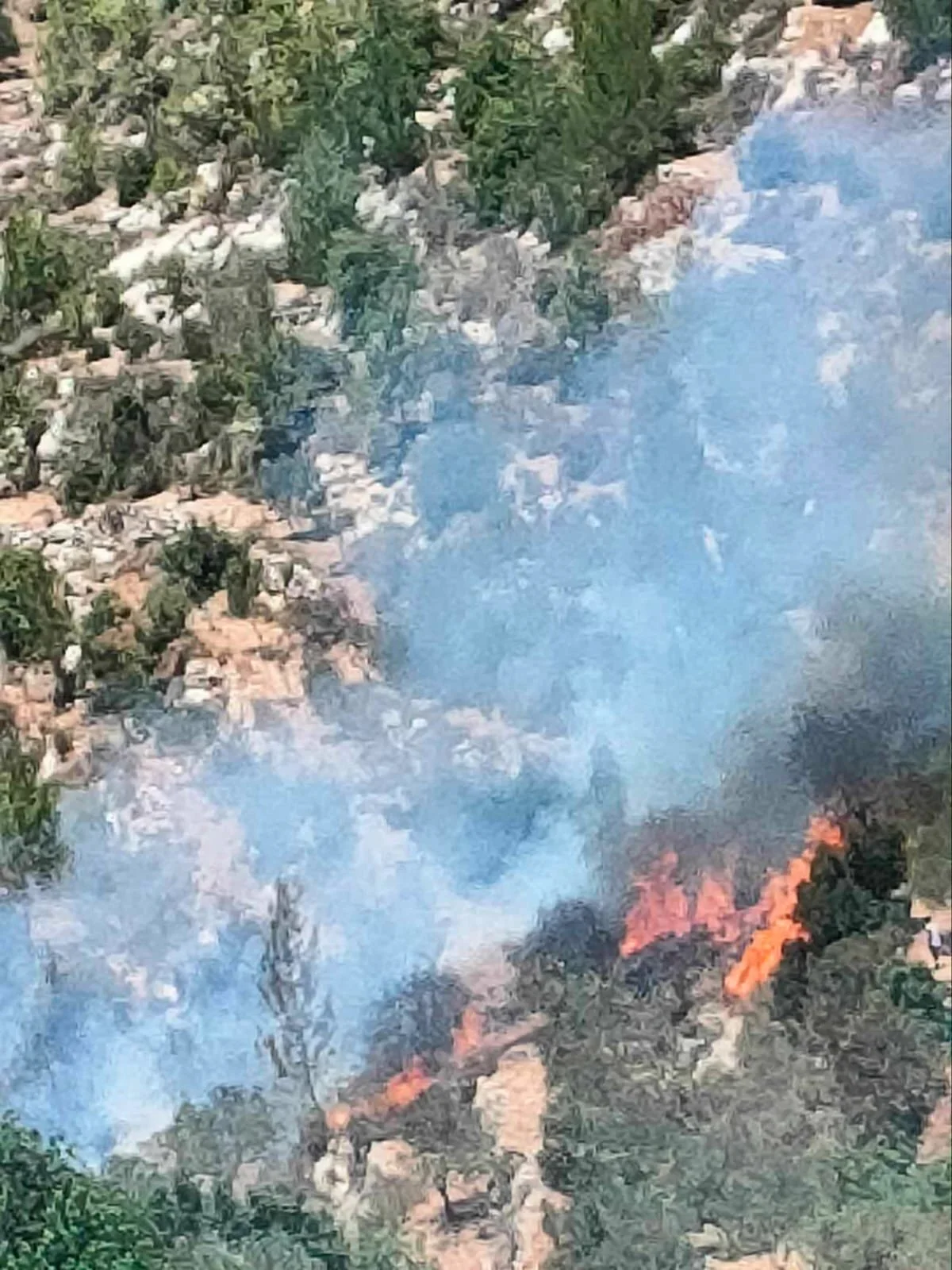
Wadi Makhrour, July 2024: photo showing wild fires set by colonial settlers in the core area of the World Heritage site of Battir
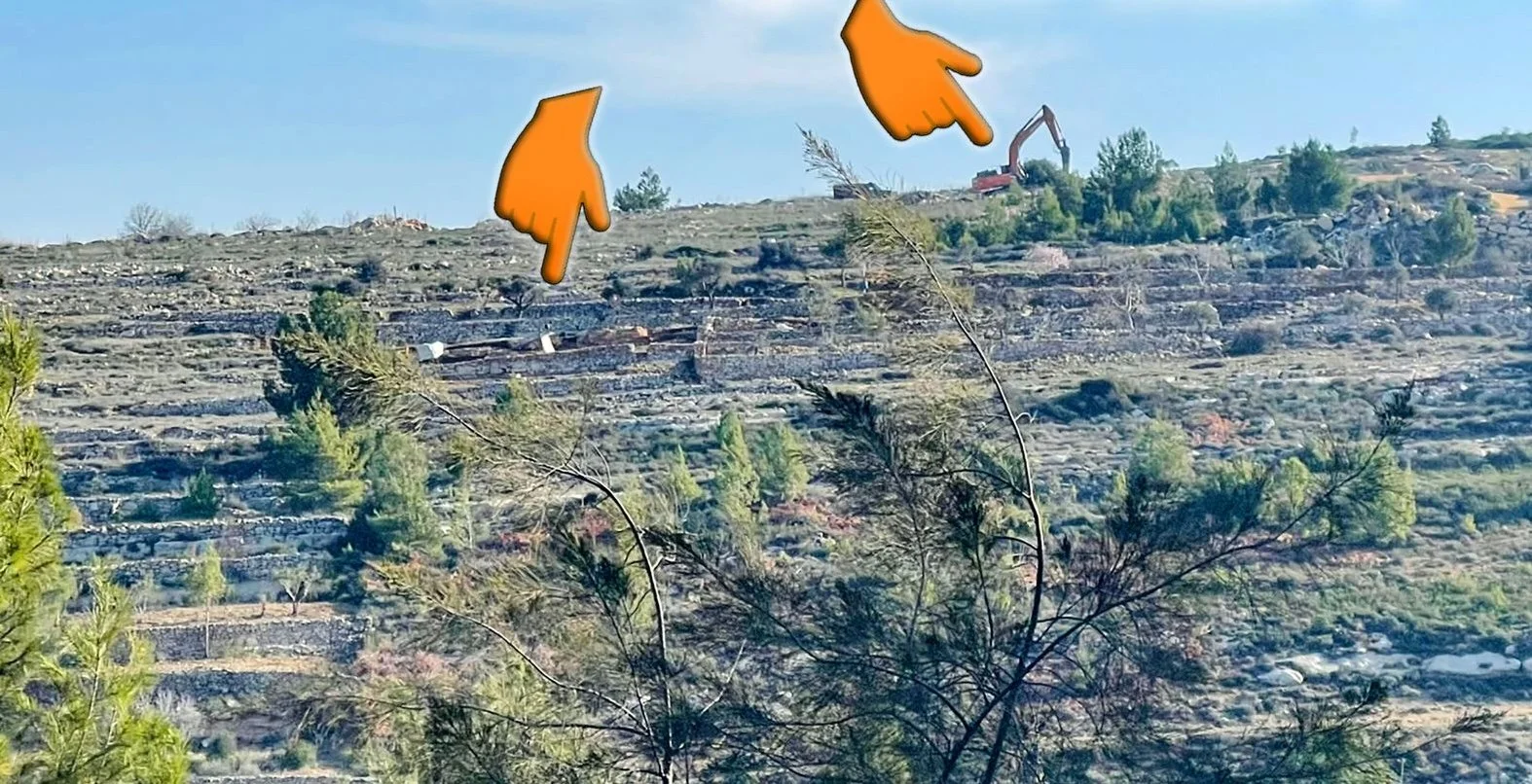
Wadi Makhrour, January 2025: photo showing colonial settlers establishing outposts in the core area of the World Heritage site of Battir.