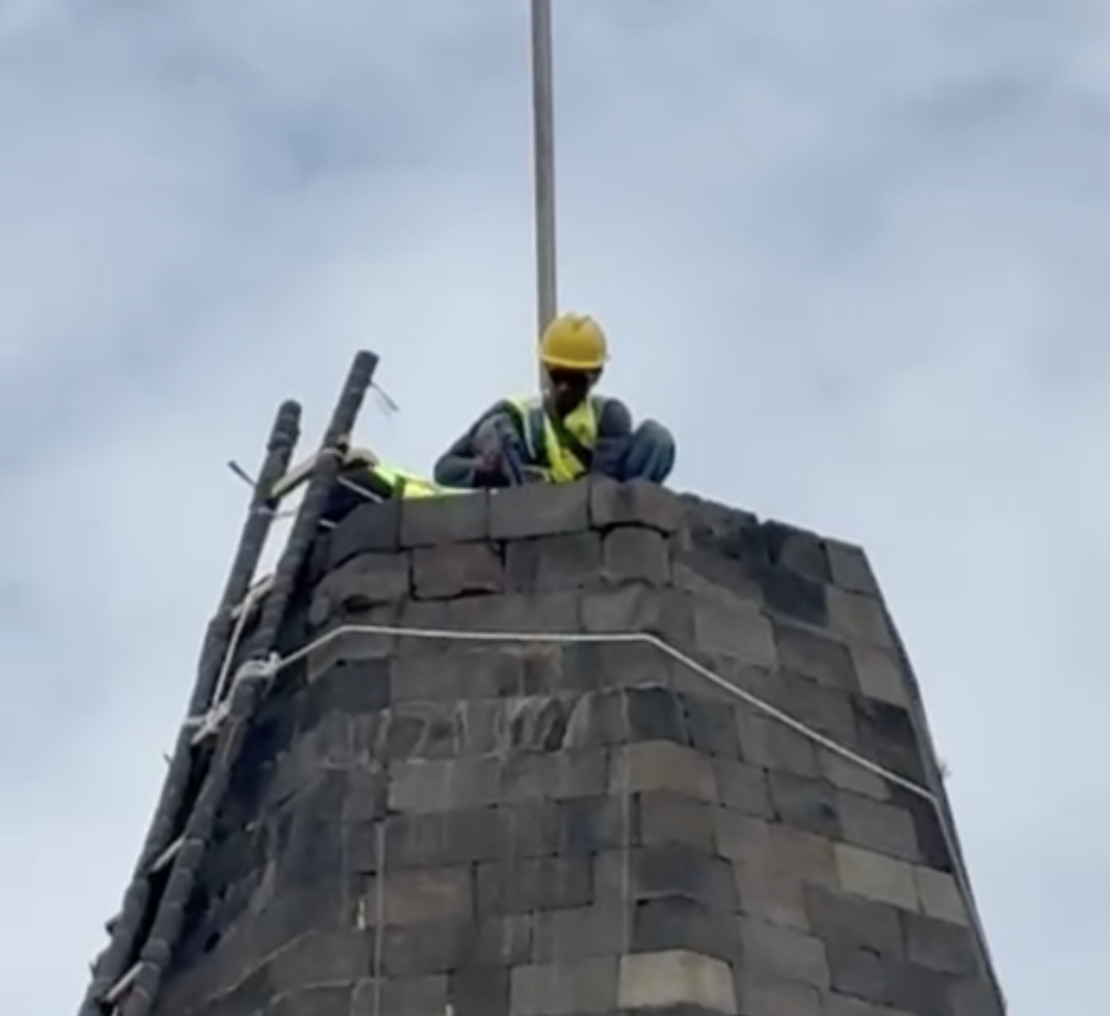
At the summit of the iconic Borobudur Temple, the Indonesian government is advancing the installation of a new chattra atop the main stupa, targeting completion by 2026. This move has sparked intense debate, as it proceeds without a comprehensive, independent Heritage Impact Assessment (HIA) submitted to the UNESCO World Heritage Committee and lacks formal consultation with key advisory bodies such as ICOMOS. Despite official claims of adherence to UNESCO conservation principles, the process raises significant concerns regarding procedural transparency and heritage protection.
A Conservation Loophole and Adaptive Intervention
UNESCO’s Operational Guidelines (Paragraph 86) strictly require that any reconstruction of heritage sites be based on complete and detailed documentation to avoid conjecture. However, recent research by the National Research and Innovation Agency (BRIN) reveals that only about 42% of the stones from the early 20th-century chattra reconstruction by Theodoor van Erp can be verified as original. This incomplete documentation makes authentic restoration impossible without violating UNESCO rules. To circumvent this, the government has framed the project as an "adaptive intervention" under the Burra Charter. This approach allows modifications to accommodate the site’s ongoing religious use, recognizing Borobudur as a "living heritage" site. The new chattra design is deliberately modern, made of bronze and steel plated in gold, and visually distinct from the original stonework, in compliance with the Venice Charter’s requirements for new additions to heritage sites.
Spiritual Significance and Symbolic Restoration
For many Buddhist practitioners, a stupa without a chattra is likened to a "king without a crown," symbolizing an incomplete cosmological narrative. The approved design, named Chattra Triratna Dasabhumi, stands 6.2 meters tall and integrates profound Buddhist symbolism. Its three upper discs represent the Three Refuges—Buddha, Dharma, and Sangha—while the ten octagonal rings signify the Dasabhumi, the ten stages on the path of a Bodhisattva’s awakening. Supporters argue that this installation restores the spiritual essence and "feeling" of Borobudur, aligning with the principles of authenticity outlined in the Nara Document. This theological and cultural motivation underpins the government’s urgency despite the unresolved technical and conservation challenges.
Severe Structural and Material Risks
The physical realities of installing this new chattra present grave risks to the monument’s structural integrity. Weighing approximately 800 kilograms, the chattra will be placed atop Borobudur’s main stupa, which is constructed using dry masonry—a method relying solely on gravity and friction to hold interlocking volcanic andesite stones together, without mortar or cement. A technical report from September 2024 warns of three primary structural hazards:
Bursting Force (Bulging): The heavy downward load could compress the stupa’s core, generating lateral forces that push outward against the ancient stone walls, risking deformation or collapse.
Eccentric Compression: Any deviation from perfectly vertical load distribution could induce overturning moments, threatening the stupa’s balance and stability.
Seismic Resonance: Situated in earthquake-prone Java, the heavy chattra would act as an "inverted pendulum," amplifying swaying motions during seismic events and putting the narrow neck of the stupa at extreme risk of failure.
Beyond structural threats, the use of bronze in a tropical, rainy climate introduces chemical dangers. The porous volcanic andesite stone beneath the chattra is vulnerable to galvanic corrosion. Acidic rainwater can facilitate the leaching of copper ions from the bronze, causing irreversible green verdigris staining on the ancient stones, which would represent permanent damage to the monument’s original fabric.
Procedural Concerns and UNESCO Risks
The absence of an independent, thorough HIA and the lack of formal consultation with UNESCO’s advisory bodies contravene established heritage management protocols. The produced HIA has faced criticism for insufficient independence and failure to adequately evaluate the multi-dimensional risks posed by the project. Proceeding with such a heavy, potentially irreversible intervention without explicit UNESCO approval risks damaging Indonesia’s international cultural standing.
This situation echoes the precedent of Georgia’s Bagrati Cathedral, which lost its World Heritage status in 2017 after irreversible modern interventions compromised its authenticity. Borobudur has already been the subject of multiple UNESCO reactive monitoring missions, most recently in 2024 and 2025, which cautioned against inappropriate management and urged the development of a comprehensive Management Plan. Ignoring these warnings and advancing the chattra installation could result in Borobudur being placed on the "World Heritage in Danger" list, a designation that would significantly impact its global reputation and tourism.
Balancing Heritage and Living Tradition
Borobudur is not merely a national treasure but a heritage of universal value. Its management demands transparent, multidisciplinary, and participatory processes that respect both its Outstanding Universal Value (OUV) and its role as a living religious site. Any intervention must be underpinned by rigorous structural safety assurances and a guarantee of full reversibility—meaning the chattra could be removed without damaging the ancient stones.
The current push to crown Borobudur with a new chattra exemplifies the complex tensions between preserving archaeological authenticity and honoring living spiritual traditions. Without careful, evidence-based deliberation, the project risks transforming a sacred symbol of enlightenment into a cautionary tale of heritage mismanagement.
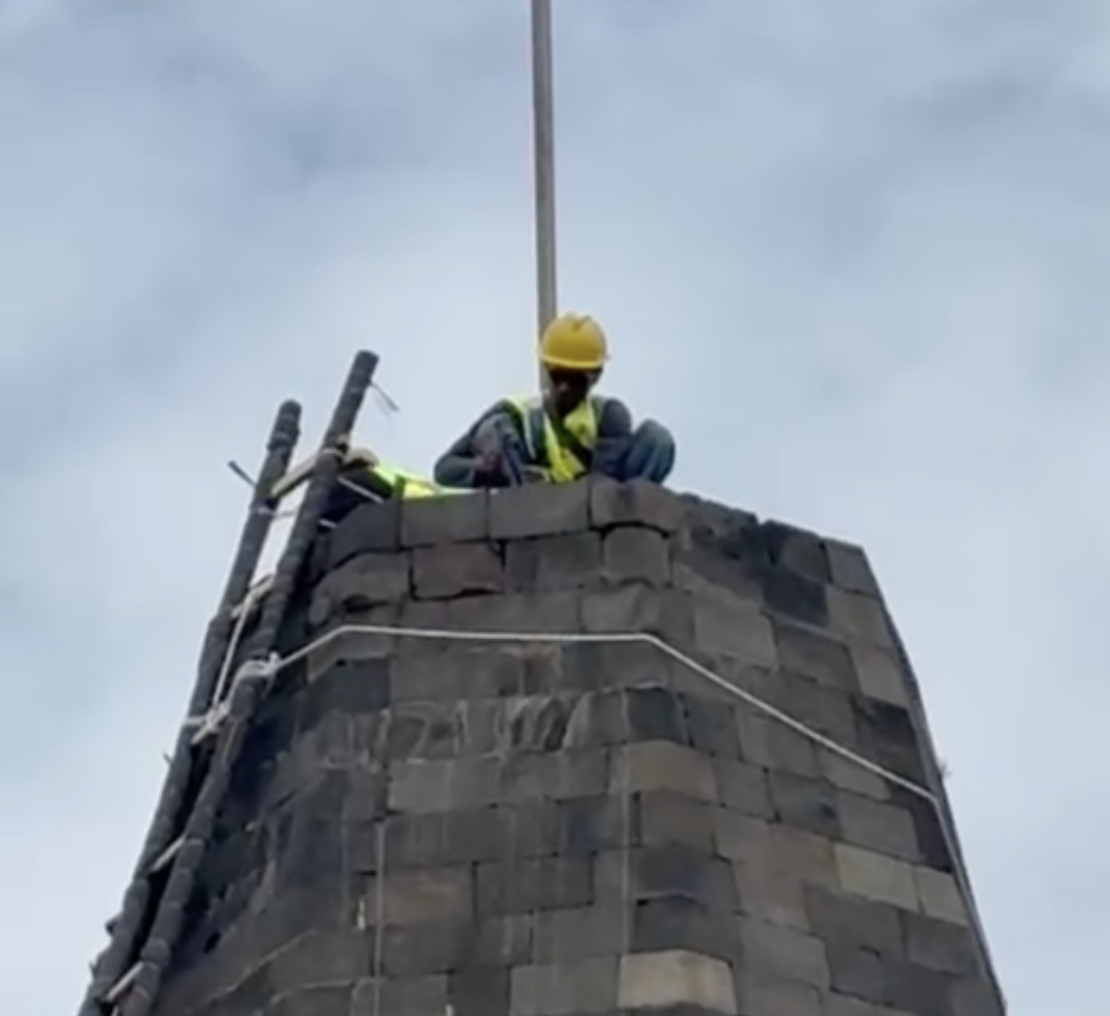
Stupa chattra installation @ Kandang Kebo Community / Borobudur