Reviving traditional mural painting Zanjafoor: Women-led Craft in Ghadames, Libya
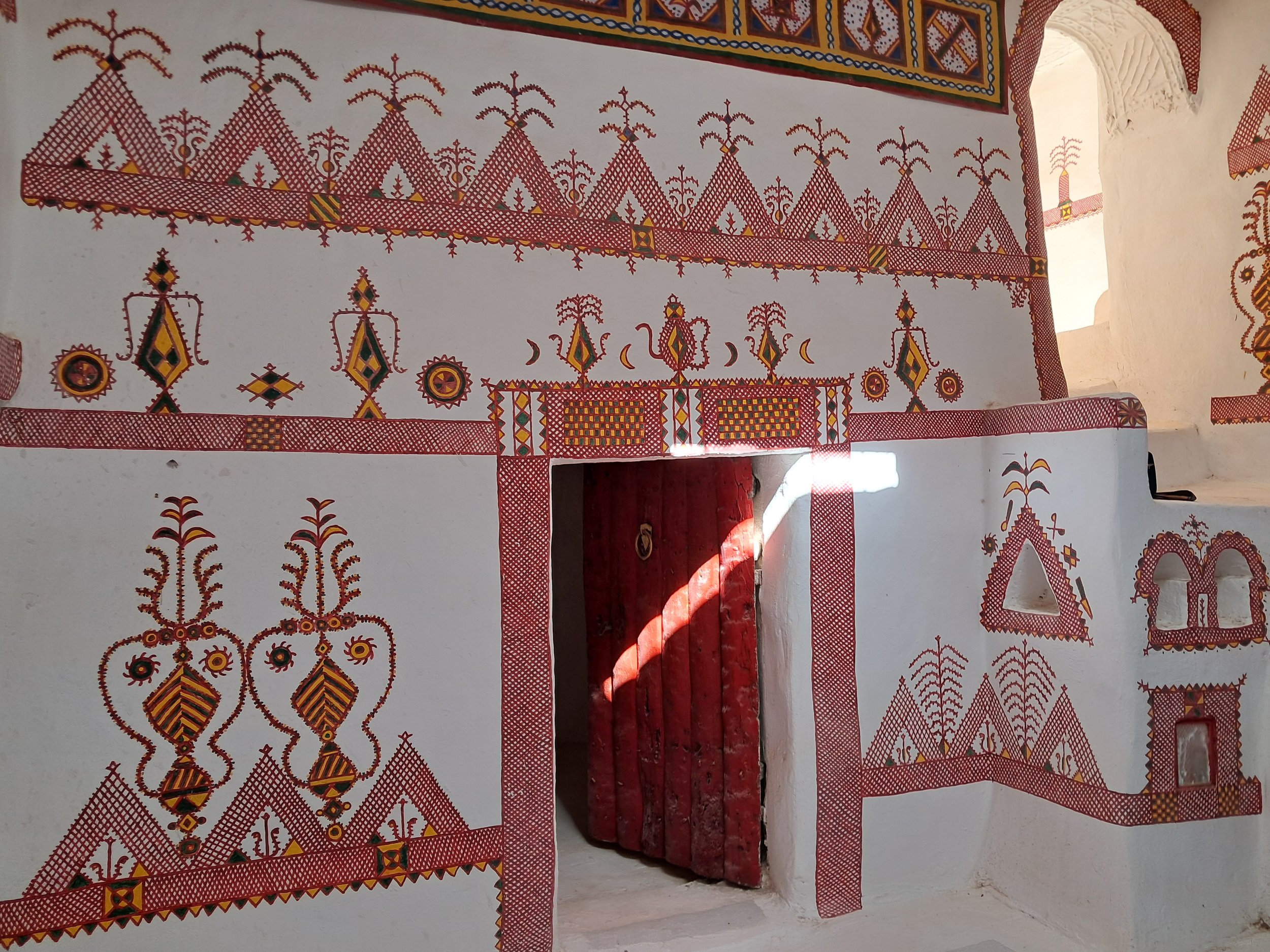
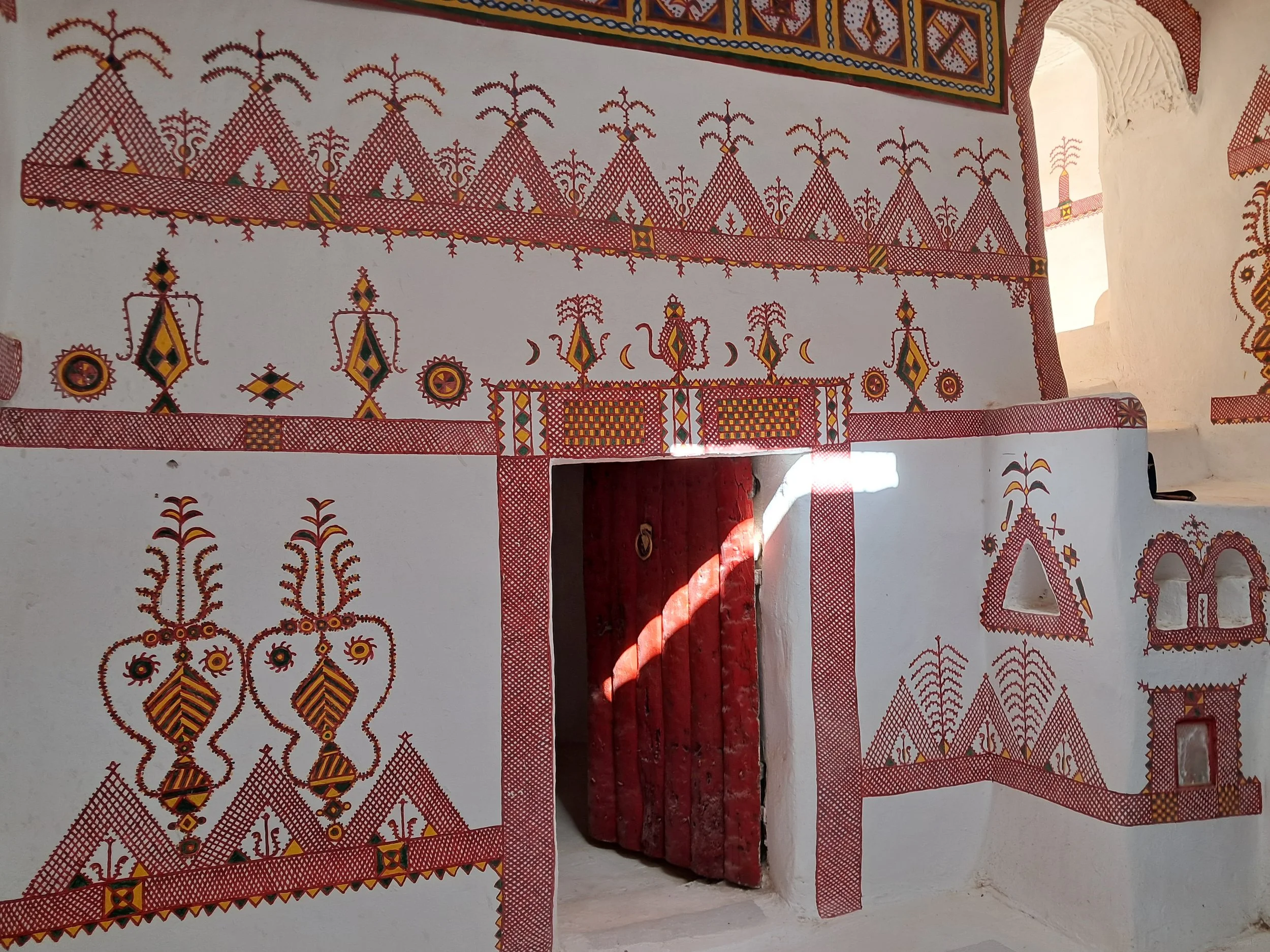
Zanjafoor craft integrated into the Visitor Centre interiors through collaboration with local craftswomen ©Hiba Alkhalaf, May 2025.
The Old Town of Ghadames is a UNESCO World Heritage Site, inscribed in 1986, recognised for its distinctive pre-Saharan urban form and its layered, climate-responsive architecture. Often described locally as a settlement with deep historical continuity (frequently framed as spanning millennia), Ghadames is also known for its horizontal movement system: ground-level routes and spaces historically associated with men’s public life, and an interconnected roofscape that enabled women’s movement across the town via rooftops.
In Ghadames, heritage is not only held in buildings – but it also lives in the skills that make those buildings possible. Mud-brick houses depend on seasonal maintenance, specialist knowledge, and decorative practices that carry memory and identity across generations. One of these practices is Zanjafoor: a local Amazigh (Berber) wall-art tradition used in interior finishes, known for its bright colours and distinctive motifs.
Through MaLiCH (Managing Libya’s Cultural Heritage), I co-led work that linked built-heritage recovery with local capacity, livelihoods, and community leadership. During the rehabilitation and development of the Ghadames Visitor Centre, we worked closely with Mrs Sadia Bin Younis –founder of the Tamaniht Centre for Heritage and a master practitioner of Zanjafoor– to ensure that Zanjafoor was embedded as living heritage, not treated as a decorative add-on. In her book documenting Zanjafoor, Sadia highlights that the craft is around 90% led by women, who historically transformed the interiors of their homes through this practice, while men used the craft more often for door decorations and, in more recent contexts, for modern artistic work.
From the start, we wanted to avoid a familiar pitfall in heritage projects: celebrating “tradition” while outsourcing delivery to external contractors, leaving local makers unrecognised and unpaid. Instead, we prioritised co-production, with local institutions and practitioners shaping both the process and the outcomes.
Local partners were central to this approach: the Ghadames City for Promotion and Development Authority (GCPDA), the Women’s Training Centre in Ghadames, and the Tamaniht Centre for Heritage. A local survey led by the team identified Zanjafoor as an endangered practice, with only a small number of women recognised as master practitioners. That finding made the urgency clear: without targeted training and support, the craft risked disappearing –along with the knowledge systems embedded within it.
We therefore developed a pathway that treated Zanjafoor as a practice with cultural, social, and economic value. We began by documenting materials, motifs, and techniques with the women practitioners themselves, ensuring knowledge was recorded with local ownership and consent. From there, we moved into hands-on workshops designed and delivered by local women. These workshops supported skills transfer, built confidence in quality standards for public –facing commissions, and enabled collaborative decisions about how Zanjafoor could sit respectfully within the Visitor Centre interiors– in ways that retained authenticity and recognised authorship.
This mattered for more than aesthetics. The process created paid and credited opportunities for local craftswomen, strengthened relationships between heritage governance and community expertise, and demonstrated how traditional knowledge can be embedded into contemporary heritage infrastructure without stripping it of meaning. It also helped shift the Visitor Centre from a purely physical rehabilitation project to a platform for community-led interpretation and skills-based heritage recovery.
The wider lesson is simple: craft revival is not nostalgia. Done well, it is a form of heritage care-building dignity, visibility, and practical resilience. It requires fair commissioning, shared credit, local decision-making, and long-term investment in training and micro-enterprise support. This community-centred approach, reflected in the rehabilitation and creation of the Ghadames Visitor Centre and its engagement model, has also been recognised internationally, including through the ICCROM–Sharjah Grand Award (2024).
إحياء الزنجفور في غدامس- ليبيا: حرفة تقليدية تقودها النساء
د. هبة الخلف
تُعَدّ المدينة القديمة في غدامس موقعاً مُدرجاً على قائمة التراث العالمي لليونسكو منذ عام 1986، وهي معروفة بتخطيطها الصحراوي الفريد وعمارتها الطينية المتكيفة مع المناخ. وغالباً ما يُشار إليها محلياً بوصفها مدينة ذات امتداد تاريخي عميق (تُقدَّم أحياناً كاستيطان يمتد لآلاف السنين). كما تتميّز غدامس بنمطٍ خاص من الحركة الأفقية داخل المدينة: مسارات ومساحات في المستوى الأرضي ارتبطت تاريخياً بالحياة العامة للرجال، وفي المقابل يمتد مشهد السطوح المتصل الذي أتاح للنساء الحركة عبر الأسطح بين البيوت على مستوى المدينة.
في غدامس، لا يختزن التراث في المباني وحدها، بل يعيش أيضاً في المهارات التي تجعل تلك المباني ممكنة. فبيوت الطين واللبن تعتمد على الصيانة الموسمية، وعلى معارف متخصصة، وعلى ممارسات زخرفية تحمل الذاكرة والهوية عبر الأجيال. ومن أبرز هذه الممارسات الزنجفور (Zanjafoor): تقليد فني أمازيغيي (بربري) للرسم الجداري يُستخدم في تشطيبات الداخل، ويتميّز بألوانه الزاهية وزخارفه الخاصة.
من خلال مشروع MaLiCH (إدارة التراث الثقافي في ليبيا) شاركتُ في قيادة عمل يربط بين ترميم التراث العمراني وبناء القدرات المحلية وسبل العيش والقيادة المجتمعية. وخلال إعادة تأهيل وتطوير مركز زوّار غدامس، عملنا عن قرب مع السيدة سعدية بن يونس- مؤسسة مركز تمانحت وإحدى حاملات المعرفة/الخبيرات الرئيسيات في الزنجفور- لضمان إدماج الزنجفور بوصفه تراثاً حيّاً، لا مجرد عنصر زخرفي إضافي. وتشير سعدية في كتابها الذي يوثّق الزنجفور إلى أن هذه الحرفة تقودها النساء بنسبة تقارب 90%؛ إذ ساهمن تاريخياً في تحويل داخل البيوت عبر الزنجفور، بينما استخدم الرجال الحرفة غالباً في زخرفة الأبواب، وفي السياقات الأحدث ضمن أعمال فنية حديثة.
منذ البداية، حرصنا على تجنّب مأزق شائع في مشاريع التراث: الاحتفاء بـ “التقاليد” مع إسناد التنفيذ لمتعهدين خارجيين، ما يؤدي إلى تهميش الحرفيات المحليات وغياب الاعتراف بعملهن أو تعويضهن بشكل منصف. لذلك اعتمدنا نهج الإنتاج المشترك، بحيث تسهم المؤسسات المحلية والممارسات أنفسهن في تشكيل العملية والنتائج. وكان للشركاء المحليين دور محوري في ذلك: جهاز تنمية وتطوير غدامس (GCPDA)، ومركز تدريب النساء في غدامس، ومركز تمانحت للتراث. وقد أظهر مسحٌ محلي نفّذه الفريق أن الزنجفور حرفة مهددة بالاندثار، وأن عدد النساء المُعترف بهن كخبيرات/حاملات للمعرفة محدود جداً. وكان هذا مؤشراً واضحاً على الحاجة الملحّة إلى تدريب ودعم موجّهين، لأن اختفاء الحرفة يعني ضياع منظومة كاملة من المعارف المرتبطة بها.
لهذا طوّرنا مساراً ينظر إلى الزنجفور بوصفه ممارسة ذات قيمة ثقافية واجتماعية واقتصادية. بدأنا بتوثيق المواد والزخارف والتقنيات مع الحرفيات أنفسهن، بما يضمن الملكية المحلية للمعرفة والموافقة الواعية على ما يُوثَّق ويُنشر. ثم انتقلنا إلى ورشات تطبيقية صممتها ونفذتها نساء محليات، ركّزت على نقل المهارات، وبناء معايير جودة للأعمال الموجهة للفضاءات العامة، واتخاذ قرارات تصميمية مشتركة حول كيفية إدماج الزنجفور باحترام داخل مساحات مركز الزوّار- بما يحافظ على الأصالة ويضمن وضوح “الملكية” والاسم والفضل. ولم يكن أثر هذا العمل جمالياً فحسب. فقد أتاح فرصاً مدفوعة ومُعترفاً بها للحرفيات، وعزّز العلاقة بين حوكمة التراث والخبرة المجتمعية، وأثبت أن المعارف التقليدية يمكن أن تُدمَج في بنى تراثية معاصرة دون تفريغها من معناها. كما ساعد على تحويل مركز الزوّار من مشروع ترميم مادي فقط إلى منصة للتفسير الثقافي بقيادة المجتمع وللتعافي القائم على المهارة.
والخلاصة بسيطة: إحياء الحِرف ليس حنيناً للماضي. فإذا نُفِّذ بشكل صحيح، فهو شكل من أشكال رعاية التراث- يبني الكرامة والظهور والقدرة العملية على الصمود. وهو يتطلب تكليفاً عادلاً، واعترافاً مشتركاً بالجهود، وقراراً محلياً، واستثماراً طويل الأمد في التدريب ودعم المشاريع الصغيرة. وقد حظي هذا النهج المرتكز على المجتمع- كما تجلّى في إعادة تأهيل وإنشاء مركز زوّار غدامس ونموذج إشراك المجتمع- باعتراف دولي أيضاً، بما في ذلك الجائزة الكبرى لـ إيكروم–الشارقة (2024).
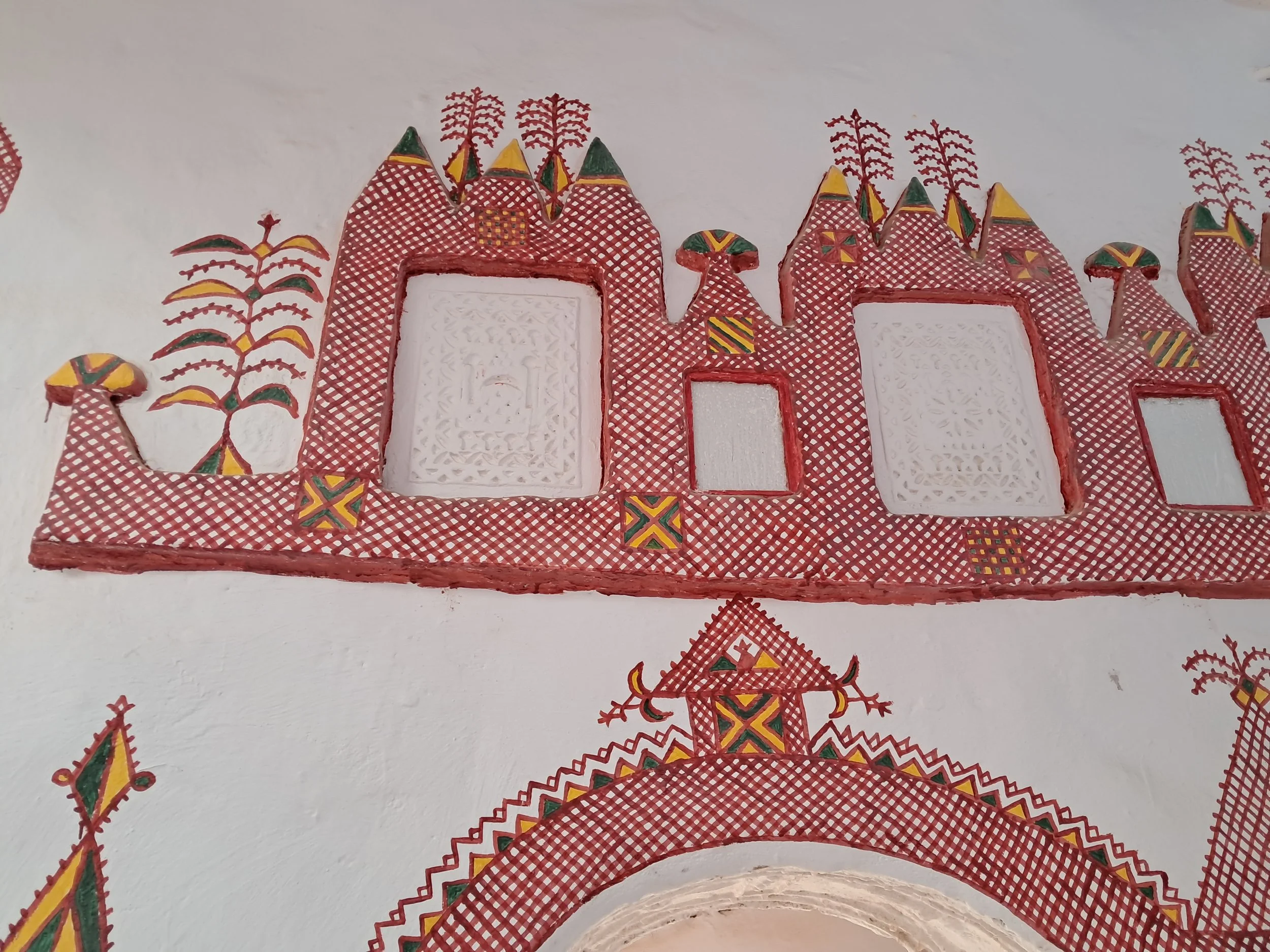
Zanjafoor craft: a detail of the Visitor Centre interiors ©Hiba Alkhalaf, May 2025
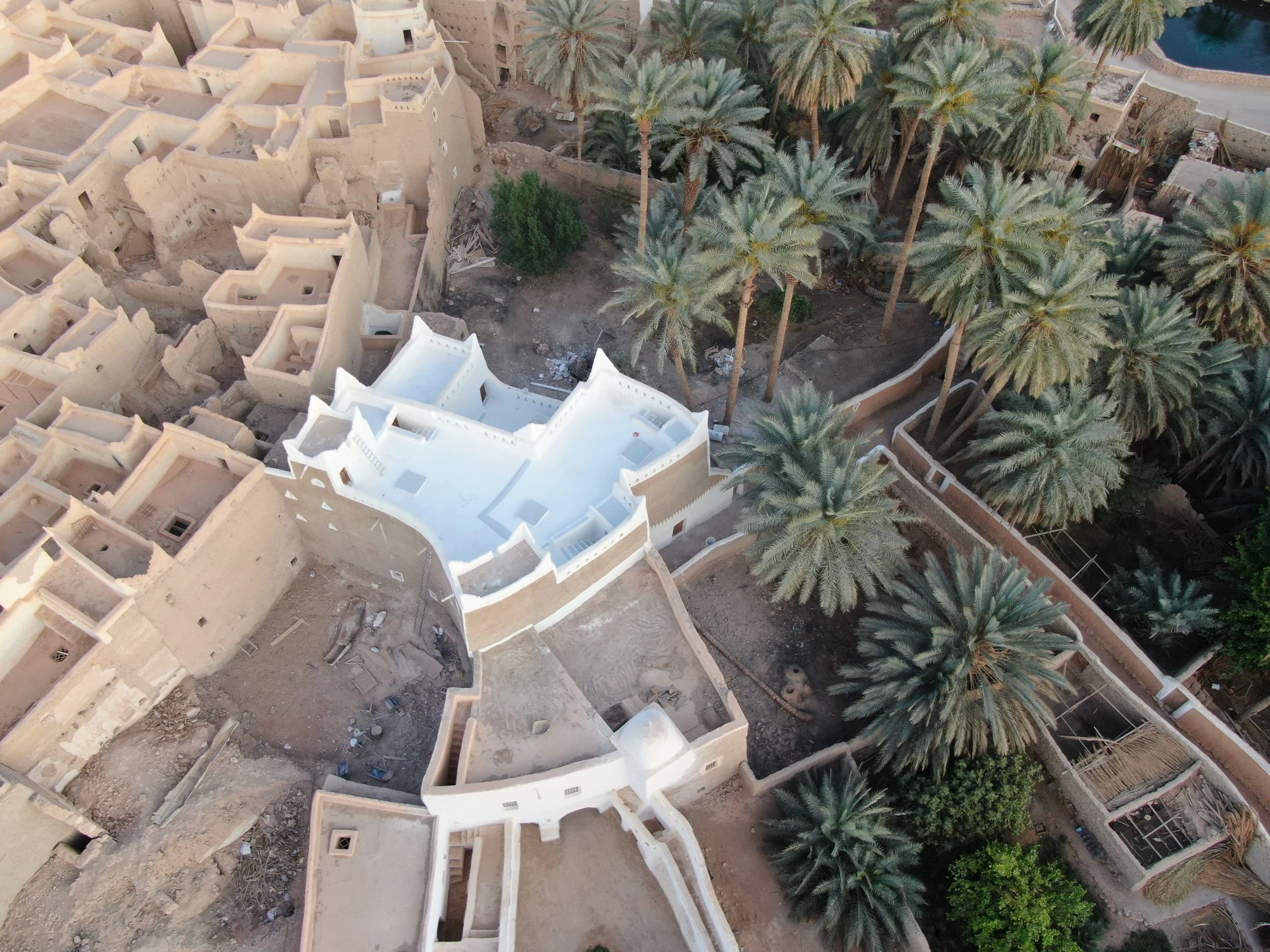
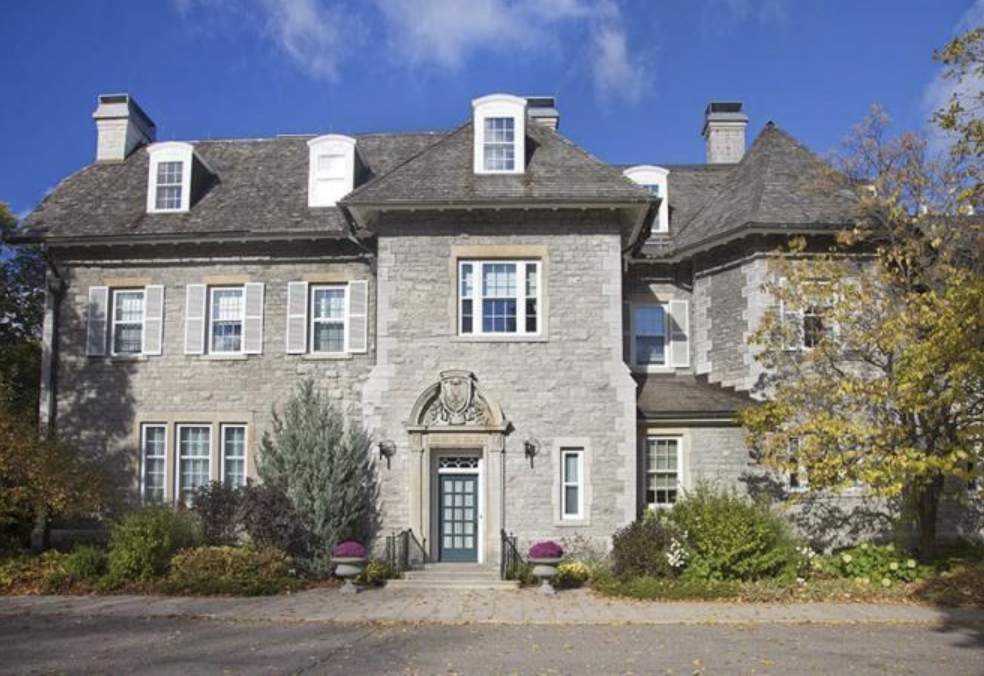
The rehabilitated Visitor Centre supporting heritage interpretation and community-led cultural programming in Ghadames ©MaLiCH project, May 2024.