Monemvasia: The Castle That Still - But Barely – Breathes
People travel great distances to experience historic places—while enjoying the comforts that make a true holiday. And in turn, countless livelihoods depend on tourism. But what happens when tourism begins to reshape the very values and history of a place? What if it goes so far that it affects the core of its being?
By Symeon Tsalikoglou
Monemvasia
Connected by a narrow isthmus to the Peloponnese—a large, mountainous peninsula in southern Greece—the island-rock of Monemvasia rises from the sea like a myth made of stone. Near the edges, where the rock meets the water, lies Monemvasia, a Byzantine and Venetian castle village known as the Castro. From afar, it appears untouched. Labelled as having a single entrance, as being impenetrable, modern day Monemvasia has successfully been invaded by overtourism. The Castro of Monemvasia breathes faintly.
Overtourism
Monemvasia has always been a living castle filled with commerce, residents and visitors alike. Countless travelers once passed through its Byzantine walls in search of history, meaning, and wonder—and left it untouched.
Today, the Castro has fallen silent to the sounds of community. True homes that once welcomed visitors are rare. The soul that travelers once sought is now hard to find. What prevails instead is geared primarily to day-visitors who are used to bypassing tourist traps and seeking out tradition. Monemvasia is no longer what it used to be. The prevalence of short term rental properties and hotels left a void of residential life. A collective chase for overtourism by business interests has neglected sustainability and community.
Local shopkeepers already quietly note a decline in repeat visitors. The Castle is lucrative but void of soul—by some accounts, not worth visiting twice. How long will tourists continue to come? What happens when they discover that the essence of Monemvasia has disappeared? What will happen when the water runs out, or when the sewage spills into the sea? Will tour operators keep coming to Monemvasia if we do not take care of our Monemvasia? How long will the narrative of “being a great place to visit” last? And what will happen to tourism when the truth emerges that photographs are better than reality?
Cable car
The rock of Monemvasia rises sharply. The upper castle is inhabited only by incredible Byzantine ruins and an authentic replica of the Hagia Sophia church in Istanbul. To date, these can be reached only on foot, a short, yet unique experience walking up the historic steps (not more than 15 minutes with photo stops). The cable car that will bypass the ancient uphill path, celebrates convenience and sabotages the unique sense of encounter, precisely the authentic encounter that defined Monemvasia. With EU recovery funds and a green light from the Ministry of Culture, the construction of the cable car has now been allocated a budget of seven million euros.
Policy and business interests seem indifferent to Monemvasia’s heritage, its historical integrity. Even as archaeologists, historians and residents argue that the cable car would permanently alter the structure of the Castro, erase the majestic sense of the climb and, above all, only increase the number of visitors to hollow out the Castle even more. In 2025, Europa Nostra listed Monemvasia among Europe’s seven most endangered heritage sites because of the cable car.
In a strange way, the cable car feels as radical as introducing a visitor cap or a modest entry fee to the Castle—but ironically, the latter remain taboo. The cable car is not ‘progress’, it is loss disguised as development.
Voice
The Castro of Monemvasia belongs to the larger Municipality of Monemvasia, which spans across dozens of villages—each with distinct, often urgent, agriculture, education, hydrological and infrastructural needs. In the midst of all this, Monemvasia Castro has no dedicated long-term development plan and no status within national heritage strategies. On top of that, with less than twenty permanent residents, it is challenging to raise voices about the needs related to sewage infrastructure upgrades, parking solutions, reliable internet, and enforcement of the archaeological guidelines to mitigate the impacts of seasonal fluxes.
The bells are ringing the sound of danger; Monemvasia’s growth is unsustainable. Overtourism has taken over as community needs have dwindled. What made Monemvasia attractive in the first place is no longer a reality. If the majority of locals don’t care, why should visitors? What type of tourists will be attracted? What will become of Monemvasia if it has lost its voice?
Heritage
This is not a call to bury Monemvasia in nostalgia or to resist change. It is a call to protect a unique monument of Greece and ensure that its evolution does not become its undoing. Monemvasia needs long-term strategies, not fast-track revenues. It needs regulated access, restored infrastructure, and policies rooted in sustainability. Above all, Monemvasia needs voices. Your voice. Now is the time to speak and help Monemvasia breathe again, before the damage becomes irreversible.
Let us not allow silence to become our legacy. Let us help Monemvasia breathe again, before the damage becomes irreversible.
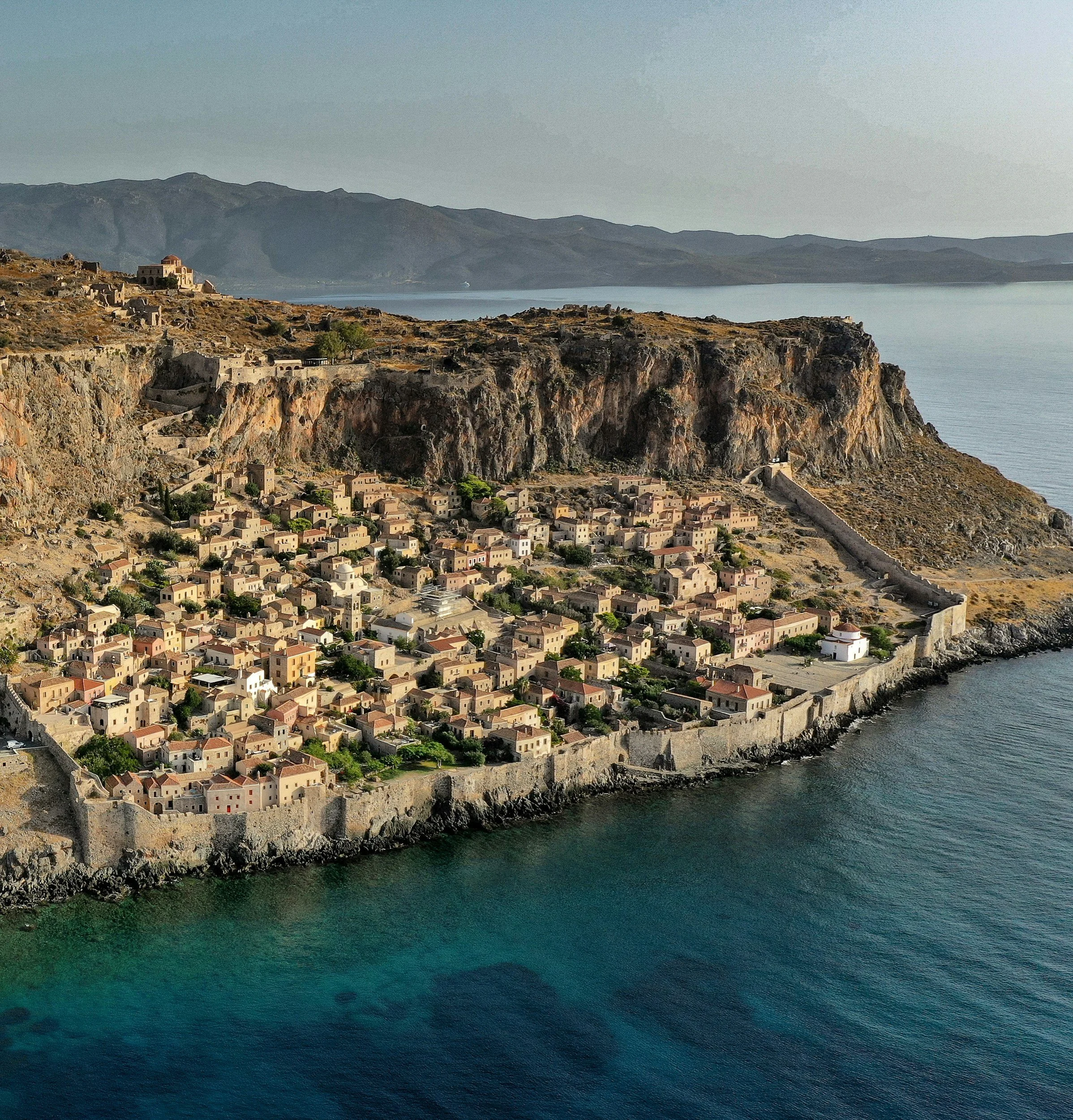
Castle of Monemvasia, Greece. © by Manousos Bouloukakis and Evangelos Mpikakis on unsplash.com